Painting Guide
How to get a lasting finish, and how to fix the most common paint problems.
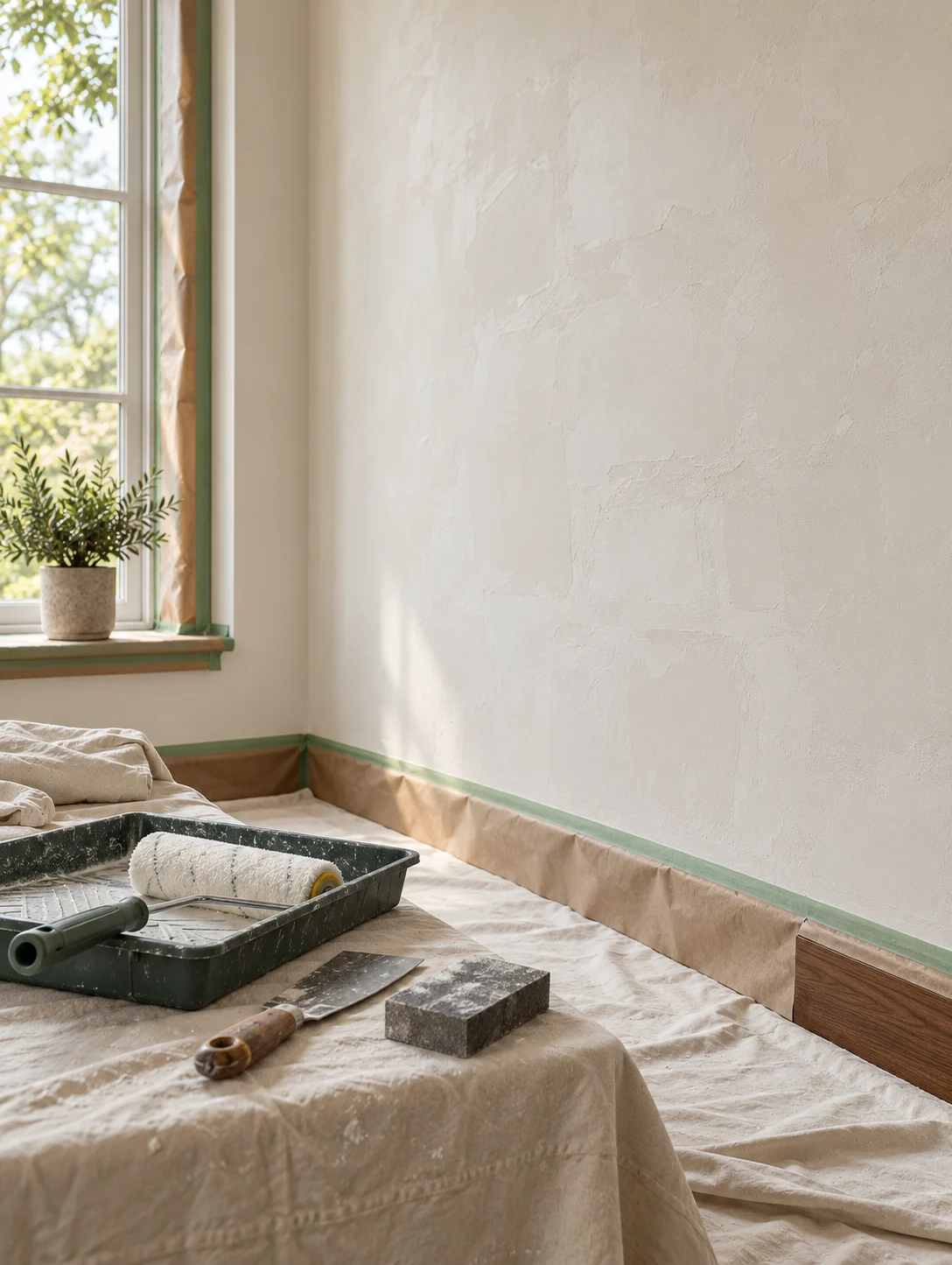
How to paint a room properly
- 01
Inspect and clean
Check the surface for damp, cracks and loose paint. Brush off dust and wash away grease, then let the wall dry completely.
- 02
Repair and fill
Scrape off flaking paint and fill cracks, dents and pinholes with filler putty: interior putty indoors, acrylic exterior putty outside. Sand smooth when dry.
- 03
Prime
Apply a water primer on interior walls, an acrylic exterior primer outside, an undercoat on wood, and red oxide primer on bare metal. Primer seals the surface and helps the top coat grip.
- 04
Apply the first coat
Stir the paint well. Cut in around edges with a brush, then roll the main area in overlapping strokes, keeping a wet edge.
- 05
Apply the second coat
Let the first coat dry as directed on the label, then apply a second coat for full, even colour.
- 06
Finish and clean up
Remove masking while the paint is still slightly soft, clean tools straight away, and seal leftover paint tightly for touch-ups.
Common paint problems
Most problems come from moisture or poor surface preparation. Find yours for the likely cause and the fix.
Not sure what you are looking at? Send us a photo and our technical team will advise.
Ask Our ExpertsWhy it happens: Paint applied over a dusty, damp, glossy or unprimed surface cannot grip and lifts away.
How to fix it: Scrape back to a firm edge, sand, clean, prime the bare areas and repaint.
Why it happens: Moisture or heat trapped under the paint film, often from painting a damp wall or in direct hot sun.
How to fix it: Find and fix the moisture source, let the wall dry, remove the blisters, prime and repaint in cooler conditions.
Why it happens: Paint applied too thickly, a second coat put on before the first was dry, or movement in the plaster underneath.
How to fix it: Remove the cracked paint, fill the cracks with putty, sand, prime and apply thinner coats with proper drying time.
Why it happens: Uneven surface absorption where no primer was used, too little paint, or paint that was not stirred.
How to fix it: Prime the surface, stir the paint thoroughly and apply a full, even second coat.
Why it happens: Strong sunlight and weather break down colour over time, more so when an interior paint is used outside.
How to fix it: Repaint with a paint made for exterior use and choose colours suited to sun-facing walls.
Why it happens: Weathering slowly breaks down the paint surface into a fine powder, or the paint was over-thinned.
How to fix it: Brush and wash off the powder, let it dry, apply an exterior primer and repaint.
Why it happens: Damp, poor ventilation and low light let mould grow on the surface, common in kitchens and bathrooms.
How to fix it: Treat and wash off the mould, fix the damp or ventilation problem, let the wall dry, then prime and repaint.
Why it happens: Poor quality tools, paint drying too fast, or going back over paint that has started to dry.
How to fix it: Sand the area lightly once dry and repaint with good tools, working quickly and keeping a wet edge.
Why it happens: Bare or poorly primed metal reacts with moisture and rust pushes through the paint.
How to fix it: Remove rust back to clean metal, apply red oxide primer, then finish with enamel.