A small room can feel welcoming without being completely white. The key is to give colours clear roles and leave enough visual space between furniture, walls and decorative details.
Use a calm base colour
A warm off-white, pale cream or soft neutral creates a gentle background for furniture. Keep the ceiling and major trim coordinated so the eye moves comfortably around the room. Look at the room’s daylight before choosing between a warmer or cooler neutral.
Add one deliberate feature colour
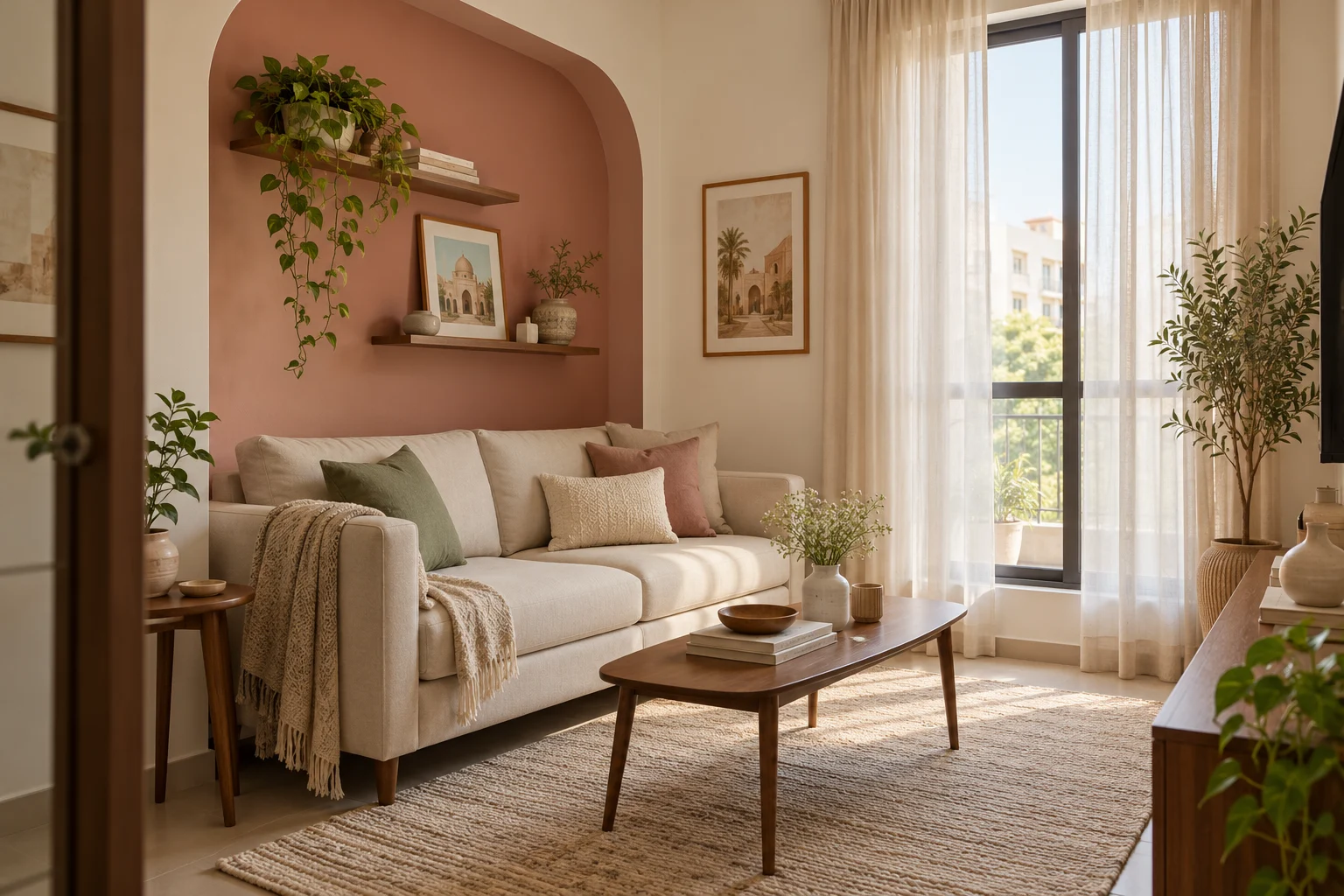
Choose a wall or alcove you want to highlight rather than adding competing accents everywhere. A muted rose can bring warmth to a bedroom, sage can complement timber, and slate blue can give a lounge depth. These are design ideas; confirm the available shade using a physical shade card.
Try three simple combinations
- Warm and grounded: off-white main walls, a warm brown feature wall, ivory textiles and walnut furniture.
- Soft and restful: pale neutral walls, dusty rose behind the bed, natural wood and cream bedding.
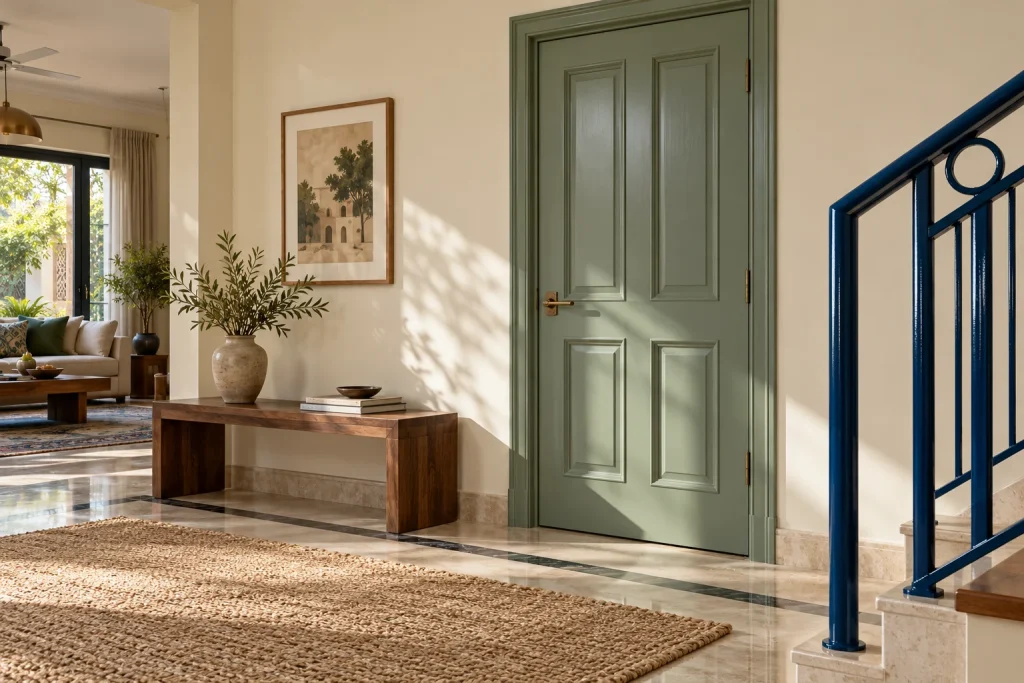
- Fresh and balanced: light neutral walls, a sage accent, linen upholstery and small brass details.
Keep colourful accessories in the same family as the feature colour to make the room feel considered.
Let the furniture set the balance
Before repainting, compare samples with your sofa, curtains and floor. Large items occupy much of the view, so a wall colour that looks attractive alone may feel different beside them. In a compact room, a few useful pieces and clear walking space often matter more than another decorative colour.
Check the colour at different times
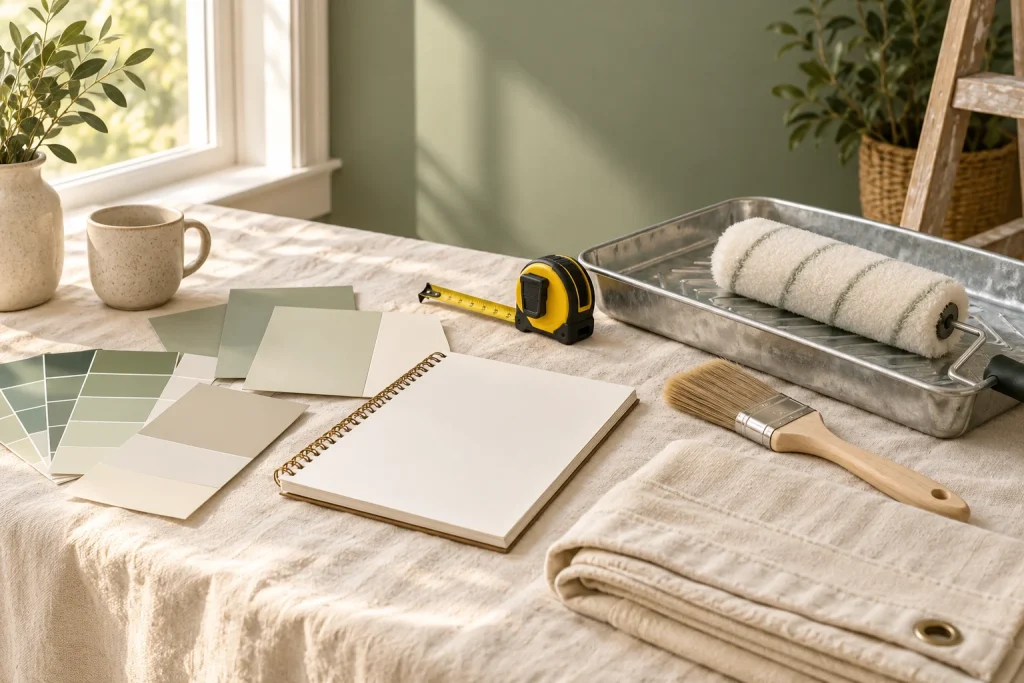
Sample the paint on the actual wall and look at it in daylight and under your normal evening lighting. Darker colours can create a cosy atmosphere, but the result depends on the room’s lighting and layout. Photographs and screens cannot guarantee an exact match.
Browse our shade cards for available colours, explore the inspiration gallery, or speak to our colour team about a palette for your room.